

Safety you can prove
A safety system has to do more than work. You need to show it works, to IEC 61508 and IEC 61511, with evidence that will stand up to independent assessment. Our TÜV-certified Functional Safety Engineers help you do that at any stage of the lifecycle.

Start at the stage you’re at
Functional safety doesn’t always start with a blank page. You might be specifying a new system, or you might need an existing one reassessed, revalidated or given a proof test regime. We can pick up at any point, from hazard identification through to verification, validation and ongoing support.
Competence you can show an auditor
IEC 61511 expects the people doing the work to be demonstrably competent. A number of our design and software engineers hold TÜV Functional Safety Engineer certification.
We use industry-recognised tools such as exSILentia for safety integrity level (SIL) assessment and verification.
Designed, built and tested by one team
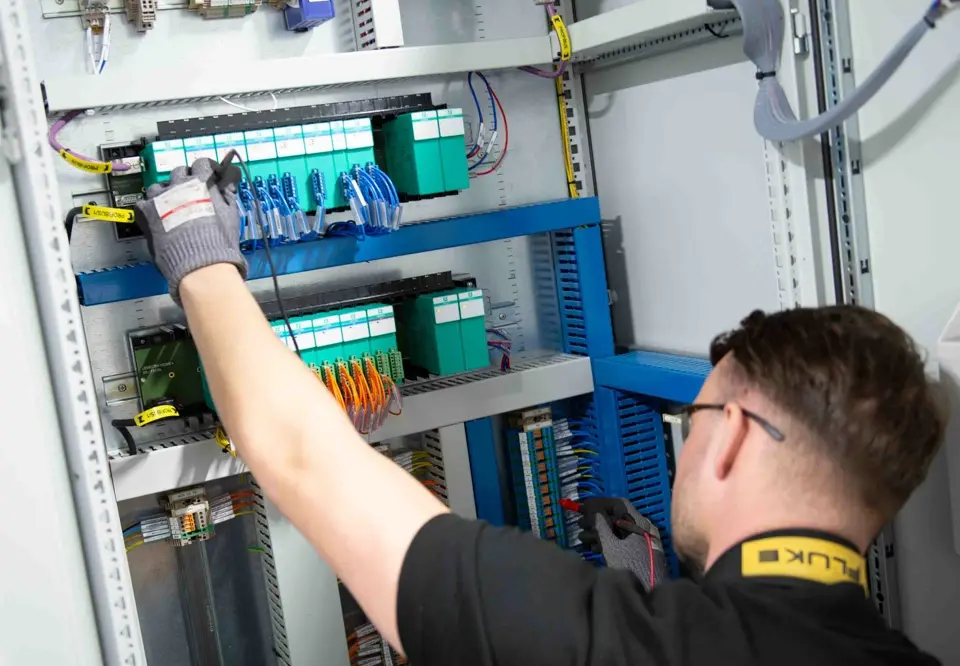
We design, program and build safety systems in the same business, so the requirements in your Safety Requirements Specification carry straight through to the panel in our workshop.
Every system is tested at FAT to functional safety standards before it reaches site. We’ve delivered safety systems on platforms including Triconex, Siemens, Rockwell and Det-Tronics.
HAZID
Hazard identification workshops to find what could go wrong, and how badly.
LOPA
Layers of protection analysis, to work out how much risk reduction each function needs.
SIL targets
Setting the safety integrity level (SIL) each function has to meet.
Safety requirements
A Safety Requirements Specification (SRS) defining what each function must do, and how reliably.
System design
Safety systems designed and integrated to meet their targets.
Assessment
Independent functional safety checks at key stages of the lifecycle.
FAT
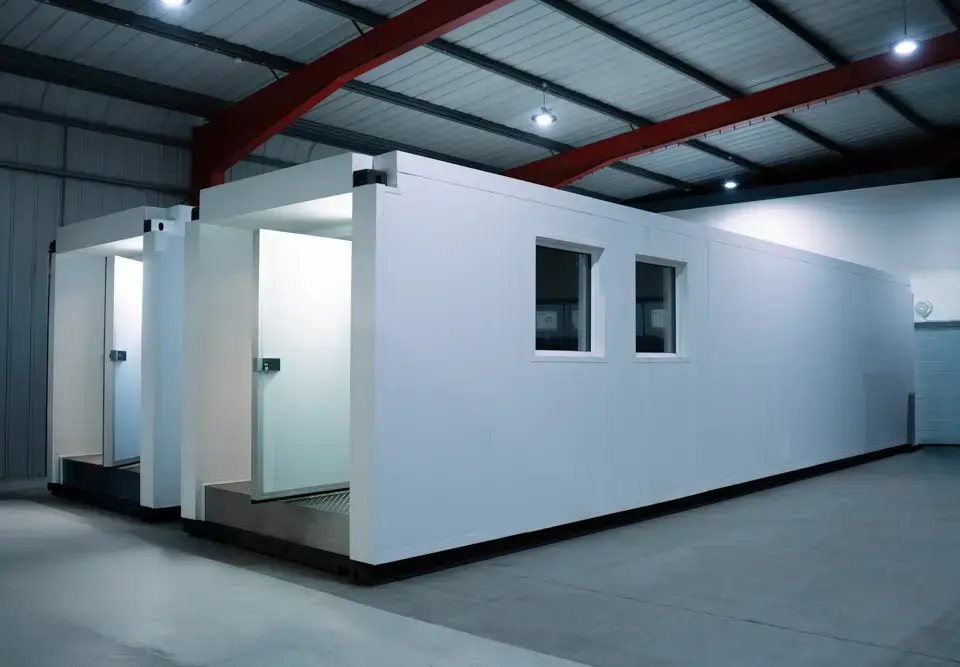
Factory Acceptance Testing to functional safety standards before anything ships.
Proof testing
Procedures and support to keep each function at its SIL in operation.
Part of a bigger picture
The engineers who set your safety requirements work alongside the people who design, build and commission the system. Nothing gets lost between the specification and the panel on site.
Start a conversation
Whether it’s a new safety system, a SIL assessment or an existing system that needs revalidating, we’re keen to hear from you.